Here is the full address:
https://www.youtube.com/@curatedbyyounghye
Here is the full address:
https://www.youtube.com/@curatedbyyounghye

From left: #Rothko, No. 31; #MaxErnst, Le roi jouant avec la reine; #Mondrian, Composition with Red and Blue from the #WeisCollection in the Christie’s preview exhibition
The art market has been very slow this year. The May auctions at Sotheby’s and Christie’s weren’t great, and because of that, the whole summer felt sluggish. Even major galleries didn’t open new shows after the summer break—it was that quiet.

To bring some energy back, the auction houses lowered their estimates and secured major collections, like Leonard A. Lauder, at Sotheby’s and the Weis Collection at Christie’s. I went to both preview exhibitions, and honestly, they were incredible. I’ve been going to auction previews for almost ten years, and these two collections were truly at the top. Personally, I loved The Collection of Robert F. and Patricia G. Ross Weis.
I was a little disappointed, though—the final sale prices weren’t as strong as Sotheby’s results. His November season was also the first sale after Sotheby’s opened its new location in the former Whitney Museum, which they purchased and renovated.
The building is beautiful, but I wasn’t very impressed with how they set up the preview exhibition. Still, #Klimt “Bildnis Elisabeth Lederer (Portrait of Elisabeth Lederer)”, the image left above, from the Lauder Collection, was absolutely stunning.
I knew it would sell for a high price. I even went back again later to see it one more time, but the crowd was huge, and the room was hard to get into.

In general, prices have softened significantly. A good example is Degas’s La Coiffure (La Toilette), the image right above — the work sold for around $7 million in 2021 but achieved less than $4 million this season, landing right at its low estimate. Blue-chip prices have clearly come down, while works priced around $1 million or below performed relatively well and attracted healthy bidding.
The mega galleries also tried to boost the season, showing blue-chip artists in November: David Zwirner had Joan Mitchell, Pace showed Agnes Martin, LDR focused on major 1980s New York artists, and Gagosian presented Jeff Koons and Richard Serra. Even the Museum of Modern Art in New York added some momentum with its shows featuring Ruth Asawa, Wifredo Lam, and Helen Frankenthaler.
Even so, the overall tone of the sales suggests that the market is stabilizing and beginning to recover. Hopefully, this positive momentum continues into Art Basel Miami Beach this year.
Please check my Instagram, "curated by younghye" for more images.


Finally, I attended Art Basel Paris and Paris Art Week this year.

Art Basel Paris felt very different from its Miami Beach and Basel versions. I met a Chinese private art dealer at the Miami Beach edition last year, who praised the Paris fair for its location, which inspired me to visit this year. The venue itself was stunning, full of history and prestige, but as someone with a background in interior design, I found the layout and presentation a bit overwhelming at first. The space was more limited than I expected, so it was hard to see individual art pieces, and navigating the show was intense on the first day. The next morning, however, visiting during the opening hours, the experience felt a little calmer and more enjoyable.
In many ways, Art Basel Paris sits between Miami and Basel. Miami offers vast spaces and dramatic, large-scale contemporary works, while Basel showcases extraordinary museum-level masterpieces. Paris, on the other hand, bridges the two, offering works that are more accessible in size and value, which may actually be ideal for collectors. The fair’s location also makes it suitable for international visitors seeking both serious art and the cultural richness that Paris naturally offers.
During Paris Art Week, the city’s museums offered exceptional exhibitions.
 |
| Gerhard #Richter Exhibition |
It was a rainy and windy day when I visited the Fondation Louis Vuitton for the Gerhard Richter exhibition. Many art professionals were already lined up before the opening, and soon I realized that almost everyone around me had made a reservation.
Just as I began to wonder if I would be able to enter, an art dealer from Geneva standing next to me offered her extra ticket—originally reserved for her sister, who couldn’t make it. I couldn’t believe my luck. We tried to enter together, but with the strong wind and her heavy bag, we lost each other in the crowd. Still, I was deeply grateful for her kindness. I hope one day I can find her again and take her out for a drink to thank her properly.
The exhibition itself was stunning—beautifully curated to trace Richter’s artistic journey and the evolution of his vision.
 |
| Cartier Foundation for Contemporary Art |
With my Art Basel VIP pass, I also had the privilege of visiting the new Cartier Foundation for Contemporary Art before its public opening — a stunning space featuring works. They have an outstanding collection of contemporary art, ranging from renowned masters such as Joan Mitchell and Damien Hirst to newly celebrated voices like Sarah Sze, whose installation work transforms the space with light and movement. The George Condo exhibition at the Musée d'Art Moderne de Paris was the largest of his solo presentations I’ve seen, and seeing Louise Bourgeois’s Spider placed in front of Raoul Dufy’s La Fee Électricité, a monumental mural, created a surprising sense of electricity in the room.
 |
| Mono-ha exhibition |
 |
| Louise Bourgeois’s Spider w/ Dufy’s La Fee Électricite |

At the Bourse de Commerce – #minimal exhibition by Pinault Collection, I discovered more about Japanese Mono-ha, which was fascinating, especially within such a beautiful architectural setting. The image is left and above right.
Design Miami Paris was another highlight — held at the magnificent Hôtel de Maisons. I especially loved the Barcelona-based Side Gallery, which presented exceptional Japanese postmodern furniture from the 1960s–1980s. Growing up in Korea and visiting Japan in the late 1980s, I found the aesthetics both new and nostalgic.
Last exhibition visit was the Palais de Tokyo to check the concept ECHO DELAY REVERB: American Art, Francophone Thought, since the concept was nice, but to me it felt too random—it was hard to grasp the overall idea or visual direction. It struck me as very French in style, where the concept seems to matter more than the presentation itself, but the Melvin Edwards show was nice. The image is below right.

Visiting Paris in the fall was another special experience. I had only visited during the summer before, but this trip felt different — more local, more connected. Although it was a work-focused trip, meeting industry people and exploring exhibitions, I traveled mostly by public transportation to feel the rhythm of the city. Having lived in New York City for over twenty years, I’ve learned that the best way to know a city is to live like its locals.
Through the metro, I found hidden spots — a small gothic-style old architecture beer pub and a wonderful bakery near the new Cartier Foundation for Contemporary Art location. I also enjoyed the beautiful Eiffel Tower view from the Palais de Tokyo.
I even visited Saint-Ouen vintage market (thanks to a Parisian friend’s recommendation). I went early at 8 a.m., but my friend didn't mention that fall hours start later, so most shops were still closed! Chatting briefly with the owner of "French Connection", a record shop selling 1980s LPs, gave me a burst of energy for the day. I promised myself to return next time and explore it properly.
This trip gave me a completely different side of Paris — less as a tourist and more as someone living the city’s rhythm. Next time, I hope to enjoy both the art world’s elegance and the everyday Parisian life that makes this city so unforgettable.

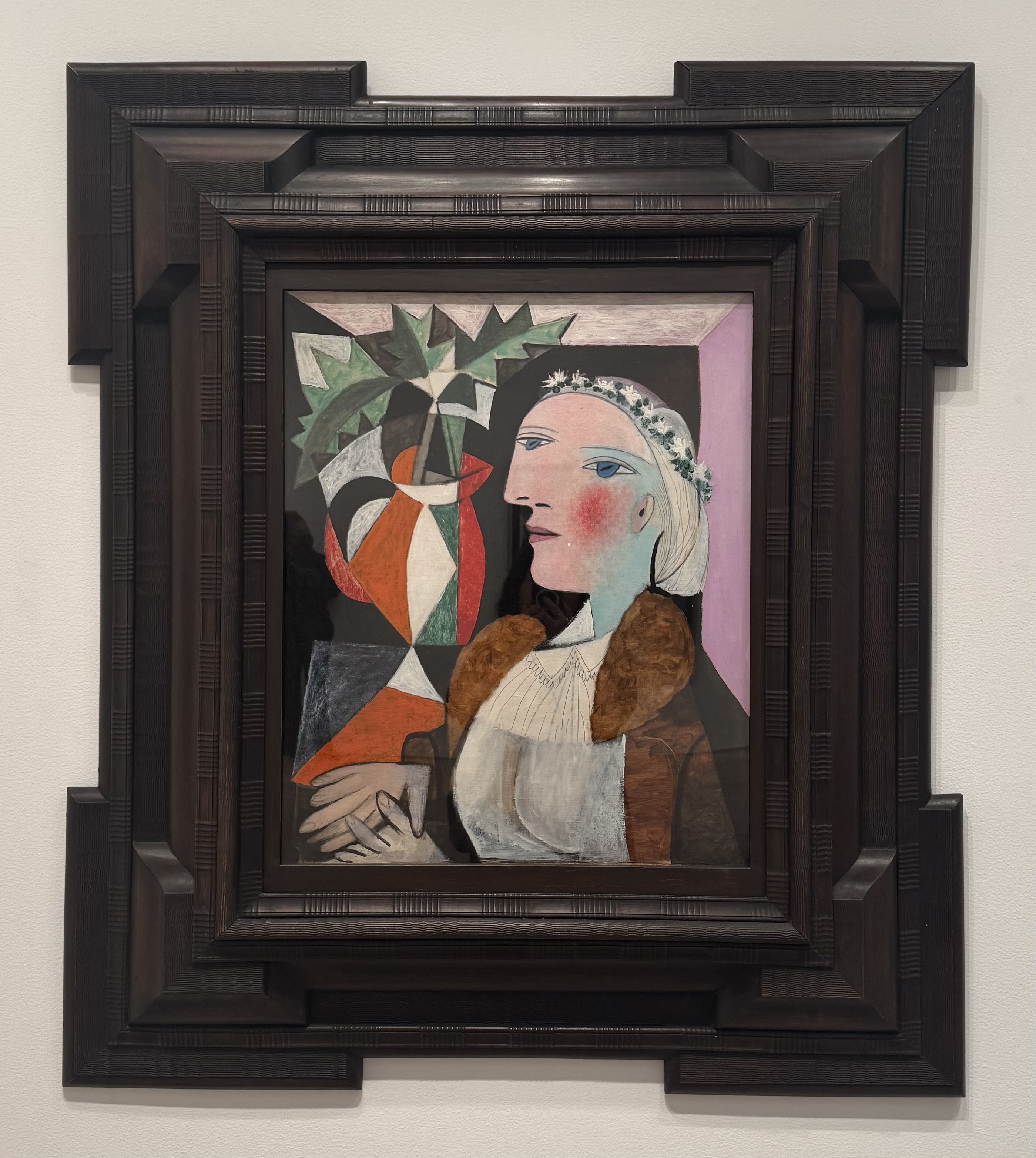
Every May, New York City transforms into a hub for the art world, with major art fairs, gallery exhibitions, and important contemporary and modern art auctions taking place. This year, I attended most of them and would like to share my impressions.


In its early years, TEFAF was a spectacle—galleries invested heavily in creating stunning, unique presentations. While the show remains highly sophisticated and continues to attract world-class galleries and artists, it now feels more like a venue for high-end collectors. Prices reflect that status—one of Eric Fischl’s works was priced at more than $250K, while a large Basquiat was listed for over $12 million. You’ll find pieces from modern masters like Picasso to contemporary names like Fischl. TEFAF is ideal for seasoned collectors and institutions looking for museum-quality art.

Frieze New York has undergone significant changes since its early days on Randall’s Island, where it launched in 2012. The fair was once known for its well-designed, spacious layout and excellent curation. Since relocating to The Shed post-COVID, it’s smaller and more condensed, but still includes top-tier galleries.
By 2017, some presentations began leaning more toward trendy or decorative works rather than thoughtful curation. However, in 2019, the dramatic use of space stood out and made for a memorable experience. This year, standout pieces included a Jeff Koons work (left image) priced at $350K and a piece by Rashid Johnson, timely, as he’s currently showing at the Guggenheim. Frieze is a strong fair for those looking to acquire new or recent works by major artists, particularly for foundations, institutions, and investment collectors. Generally, prices are lower than TEFAF, but still significant.
Independent hosted some compelling gallery booths this year. It felt like the right place to purchase art for more personal or residential spaces, like a living room or large foyer. The artists here are typically emerging and not yet trendy, but you can still find impressive large-scale paintings priced under $ 20 K. It’s a fair for collectors who trust their own taste and enjoy discovering talent before the mainstream does.
NADA is usually a good platform to discover up-and-coming artists, but this year’s edition was less impressive. I didn’t find any standout new artists or works.

After attending countless art fairs over the past decade across three continents, I’ve realized that nothing quite compares to the Spring/Break Artshow. It feels distinctly American—funky, bold, original, and delightfully imperfect. It may not be the most polished or tightly organized event, but that’s precisely what gives it character and makes it stand out.
This year’s edition in NYC was smaller than previous ones, yet it still offered the chance to connect with a diverse array of artists from various cultural backgrounds—a consistent highlight for me. I was especially impressed by Aiza Ahmed’s installation, which recreated the Wagah-Attari border and its daily Beating Retreat Ceremony through evocative drawings, music, and sculptures.
Despite its scale, I was surprised by how vibrant and energetic the show remained. Spring/Break continues to provide a refreshing and unconventional experience, unlike any other fair. While the venue can be challenging, it’s inspiring to see how artists and curators embrace and transform the space. Some of the conceptual depth on display reminded me of Art Basel, though less polished, the ideas here often feel more daring. For its creativity and willingness to experiment, Spring/Break is still an essential stop on the art fair circuit.
Each of the big three auction houses held major sales of modern and contemporary art this May. While these auctions aren’t as large as their November counterparts, they are still among the most significant of the year in New York. However, the market felt soft this time—estimates were noticeably lower, and some major works, like a Giacometti portrait sculpture, failed to sell. It wasn’t a powerful auction cycle.
Several blue-chip galleries also mounted major shows:
Gagosian (Upper East Side): Tête-à-Tête by Picasso - a stunning show since it was in collaboration with Paloma Picasso. A great opportunity to explore some lesser-known styles of Picasso's work that are not usually familiar to us.
Gagosian (Chelsea, 21st St): Japonisme: Cognitive Revolution—Learning from Hiroshige by Takashi Murakami - an interesting exploration of influence and style.
Gagosian (Chelsea, 24th St): Endless Painting by Willem de Kooning - a powerful retrospective that really shone in person.
Skarstedt (Chelsea): Oxidation Paintings (1977–1978) by Andy Warhol - these works were particularly striking due to the material changes over time, making them fascinating to experience in person.
Pace Gallery: The American Dream by Robert Indiana - a fresh look at the iconic artist beyond the familiar “LOVE” motif. The show captured Indiana’s sharp formalism and political edge with strong selections that reminded me how relevant and under-appreciated some of his lesser-known works are.
More images, please check my Instagram "curatedbyyounghye"
Pauillac: Chateau d'Armailhac, Chateau Lynch-Moussa, and Château Lynch-Bages, which is a Fifth Growth estate renowned for its robust and age-worthy wines.

Saint-Estephe: Château Cos Labory & Chateau Ormes De Pez


I attended the Art Basel Miami 2024 as I do every year. My travel with art fairs began in New York City in 2013, and for the last seven years, I’ve been coming to Art Basel Miami. Over time, I've developed a strong sense of where to focus my attention and gain inspiration.
Regarding Art Fairs and their location Experiences, I don’t think anything is necessarily better than another—it depends on the individual. For example, while waiting in line to grab a bun at the Hong Kong Cafe at Art Basel Miami 2024, I overheard a conversation between a Chinese art dealer and her client. It was the first time the Hong Kong Cafe had opened at the event, so there was quite a line. The dealer shared that she had worked at the Gagosian Gallery for several years before starting her own business. She had attended all the Art Basel events and shared that Paris was her favorite, thanks to the fantastic restaurants and performances. However, she wasn't as fond of Basel, citing its small-town feel. As for me, while I do love Paris, Basel is still my top choice. It might not be a big city, but it offers a rare blend of contemporary and medieval art that you can experience together. After traveling to many places, I can't think of many cities where the old and the new coexist so seamlessly. An old master dealer once mentioned that Basel has many excellent restaurants and food. However, with my limited background in European culture, it was a bit overwhelming for me, and I’m sure many others might feel the same. But, being a visual person, I thoroughly enjoyed simply walking around the town, taking in the blend of old and new. It was incredibly beautiful.
There's a saying that you can only truly see things as deeply as you understand them—and that’s just as true for art.
If you’re looking to buy art for yourself, the first step is educating yourself by attending numerous art fairs and exhibitions. This will help you develop your style as a collector.
1. The Art Basel Miami at the Convention Center has a vast array of galleries and artists, making it a fantastic place to shop and see the trend. However, if you’re simply buying for your own space, it’s important to choose something that resonates with you on a more intimate level.
Miami Print Art Fair 2024
 |
| #CalidaRawles @Pamm |


There was a large public art installation called "THE GREAT ELEPHANT MIGRATION" (https://thegreatelephantmigration.org/), displayed in mid-Miami Beach. After visiting Untitled Miami, I took a bus to see the installation. On the bus, there was a group of seniors who seemed to know where they were going. Once we arrived in Mid Beach, the driver asked, "Who’s ready to see the elephants?" and everyone responded enthusiastically, creating an interesting moment that felt like a school bus driver taking kids to the zoo. The elephants were incredibly detailed and massive, creating a stunning scene. From the Faena Penthouse, the view was breathtaking, and even though I couldn’t capture a perfect video, the experience was unforgettable. I believe that great art has the power to inspire everyone.
For summer, the Hamptons is my best destination. Since accommodation is so expensive, I couldn’t make a long trip; I had only two days in the Hamptons, but it was festive, and I had great memories.
George Condo & Joan MitchellFirst, I stopped by the Hampton Fine Art Fair. It was smaller than when I was there in 2022, but it had good exhibitors and many international galleries from London, Mexico City, Colombia, Italy, Chile, the Netherlands, Canada, Sweden, and Japan. I saw #Basquiat, #JoanMitchell, and #GeorgeCondo’s original works at the Omer Tiroche Gallery. It was great to discover interesting art by George Morton-Clark and Mersuko Dopazo at the Eternity Gallery.


Next, we checked the most trendy croissants—Kimchi Cheddar Croissants—at Carissa’s Bakery in East Hampton. It tasted like a kimchi pancake in pastry, which wasn’t impressive, but they have beautiful, tasty selection of pastries and cakes.
In the evening, I attended the East Hampton Antique and Design Show VIP opening. I was last there in 2013. It has grown so much. I could tell why after speaking with Lynn Stefanelli, the PR representative. She said the show had been changed from an antique show to an antique and design show. She was a very friendly and energetic person. After she had been with the show in 2014, I believe that is one of the reasons. Many great designers attended the VIP opening night. James Huniford, who is the founder of Design on A Dime, was behind me entering the show. I met him briefly when I attended Design on A Dime as one of the participating designers a few years ago. They did a great job decorating the space with beautiful flowers at the Mulford Farm. It was a great place to discover mid-century outdoor decoration items that are not easy to find in NY. It is worth visiting if you are in the Hamptons area. My friend Cynthia Murphy, who is an antique textile pillow designer, was in booth A27, which was nice. It was also good to see New York journalist Wendy Moore at the show. So many great people and the nice summer barn atmosphere made me relax as well.


The highlight of the day was the Midsummer Dance event at the Parrish Art Museum.

The museum was designed by world-famous Swiss architects Herzog & de Meuron. When I had a show at the Volta Art Fair Basel in 2021, I stopped by the Stadtcasino Basel. I loved how gorgeous their interior was, which was done by Herzog & de Meuron. That’s how I learned about them. Of course, not all their projects are good, since I wasn’t impressed by the Songeun Art Space in Seoul, Korea. But the Parrish Art Museum is one of my favorites, with its location and aesthetics. Spending an evening in the space made me truly fall in love with it.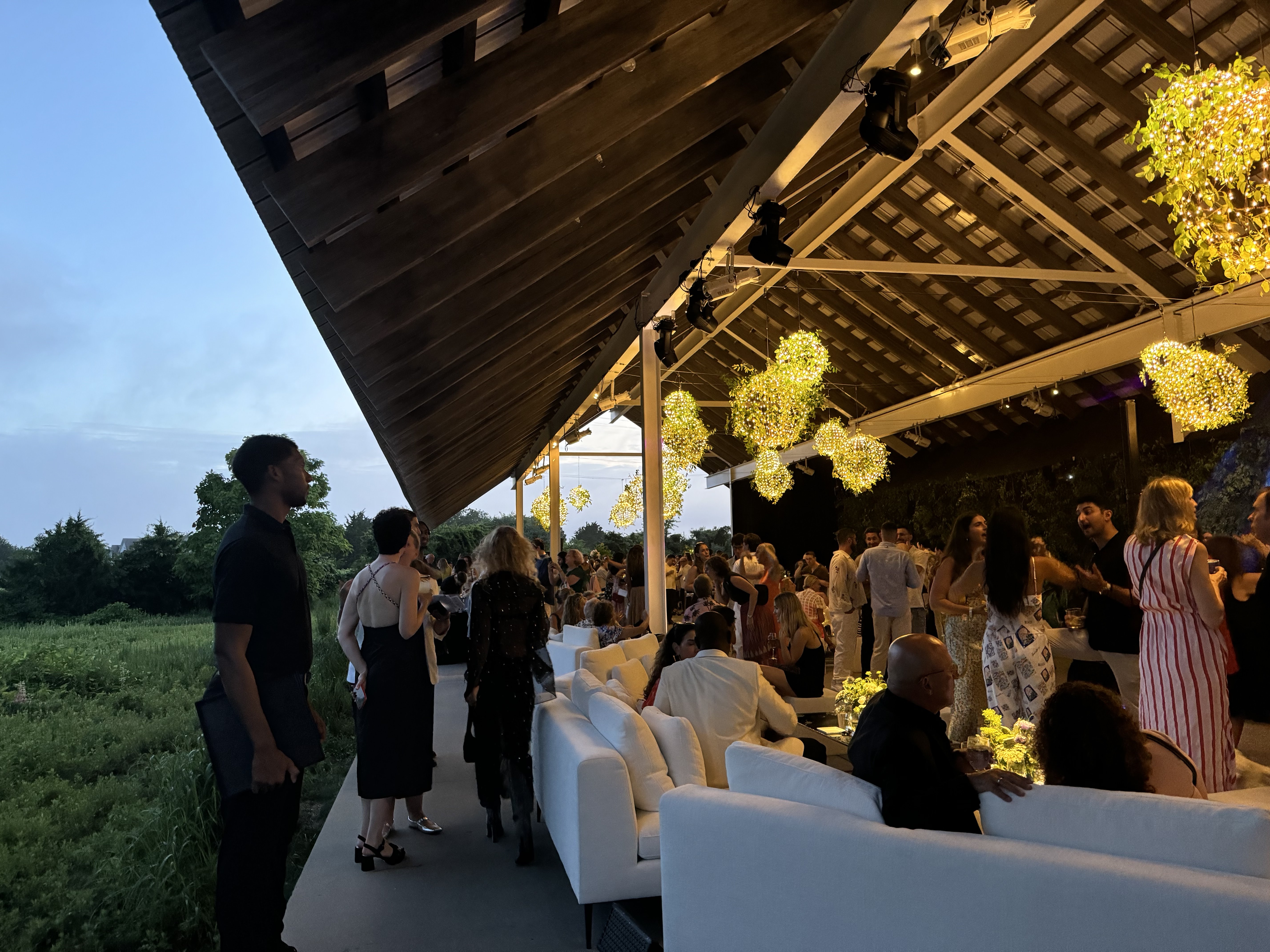 The Midsummer Dance event is their annual benefit. They did a great job decorating and organizing the event. Everything was so good; it was a magical night. Stunning flower-decorated chandeliers by Ovando in NY, beautiful lights, great music by the Angel + Dren DJ set, and a special performance by Anna of the North, beautiful light, great music by Angel + Dren DJ set, and a special Performance by Anna of the North. A wonderful night of dancing, drinks, and delicious hors d’oeuvres. One of the best events of the year so far. I had so much fun and had a memorable night.


